

 Abroadin

Choosing the right degree abroad can shape your career, finances, and even your long-term migration route. For many international students, the decision carries extra weight because tuition, visa rules, currency pressure, and scholarship access can change the entire equation. The smartest study abroad degree choice is the one that aligns with your academic readiness, funding, career goals, and the reality of studying far from home. Read this Abroadin post to find out more.
Why the Study Abroad Degree Choice Matters
A bachelor’s, master’s, and PhD abroad each have a different purpose. Take a look at the following explanations for better understanding:
- A bachelor's degree gives a full undergraduate foundation in a foreign system. Early immersion is valuable, but it requires the longest financial commitment.
- A master’s offers the best balance of cost, speed, and career payoff.
- A PhD has a different goal. It trains students for research, advanced analysis, and academic or R&D careers.
For international students from lower- and middle-income countries, the question is which degree delivers the strongest return on investment without creating debt, immigration stress, or a weak employment outcome.
That is why many applicants do better by studying abroad for a graduate degree rather than leaving home for a full bachelor's program.
When a Bachelor’s Abroad Is the Best Option
A bachelor's degree can be a good choice for studying abroad, but it requires a strong justification. It works best for applicants who:
- can afford several years of tuition and living costs, or
- have access to strong scholarships.
It also makes sense for students who want to build their academic life from the beginning in another country, especially if they plan to work there after graduation.
If your home country's undergraduate options are limited, or the destination country has a strong post-study employability, the bachelor’s becomes more than a degree; it becomes a long-term entry point into a brighter future.
When a Master’s is the Best Option for a Study Abroad Degree Choice
For most international applicants, the master's degree offers the strongest overall balance. It takes one to two years, which reduces tuition and living expenses compared with a bachelor’s degree.
It also provides a recognized credential that can enhance your employability, support your migration goals, and open doors to further study.
A master's abroad is useful if you have already completed a solid bachelor's at home. In that case, you can save money during undergraduate study, then use the master's as a strategic upgrade.
This study abroad degree choice often works well for engineers, business graduates, computer science students, public health professionals, and people in fields where international exposure matters.
Another major advantage is flexibility. A master’s abroad can lead to industry jobs, public-sector roles, research positions, or a PhD.
It matters a lot to students from countries where foreign degree holders often want both career mobility and the option to stay abroad after graduation.
When a PhD Abroad is the Best Option
A PhD abroad should never be chosen simply because it sounds impressive. It is a specialized research degree that fits a narrow but important group of students.
You should choose it if you want a career in academia, research institutes, advanced technical work, policy analysis, or specialized industry roles.
A PhD becomes a strong study abroad degree choice when you already have a solid academic record and a clear research direction. It works even better when you can secure funding.
A funded PhD can be financially wiser than a self-funded master's in some cases, because the university or research project covers tuition and living expenses.
This route often lasts three to six years or more, and the process can feel isolating. You need research maturity, writing skills, and strong alignment with your supervisor.
If your real goal is to get a job faster, move abroad quickly, or build general employability, then a PhD is not the right first step.
For students from countries with limited research infrastructure, a PhD abroad can also offer access to labs, archives, supervisors, and research funding that may not exist at home.

The Funding Reality in Study Abroad Degree Choice
Many students dream of elite universities but do not calculate the full cost of tuition, housing, insurance, visa fees, travel, books, and emergencies.
Funding decisions determine the outcome more than academic preferences do, and any mistakes can turn a good opportunity into a financial burden.
- For most international students, fully funding a bachelor's abroad is the hardest option.
- A master's abroad is still expensive, but the shorter duration makes it more manageable.
- A PhD abroad often becomes feasible only when a scholarship, an assistantship, or project funding supports it.
It is why scholarship strategy matters so much. Students should search not only for university scholarships, but also for government programs, exchange schemes, subject-based awards, and research grants.
Many scholarship systems also target students from developing countries. Graduate study is more accessible with a scholarship.
You should also think beyond tuition. A low-tuition country with very high living costs may still be unaffordable.
A higher-tuition country with better part-time work options, lower rent, or stronger post-study employment is the smarter study abroad degree choice.
Does Country Choice Matters as Much as Degree Choice
The degree level is only one part of the decision. The destination country can change the value of the degree.
You need to consider tuition, visa stability, language, labor-market access, and whether the country welcomes international graduates after completion.
- Germany often stands out because public universities charge low or no tuition for many programs, especially at the graduate level. That makes it attractive for students who need affordability.
- Norway also has a reputation for low-tuition or tuition-free study in some settings, though living costs can be high, so students still need a realistic budget.
A strong country for studying abroad is one where the academic system, visa rules, and job market align with your actual goals.
A famous university in a weak-fit country can be less useful than a modest university in a country where you can study, work, and build a bright future.
How to Choose the Best Study Abroad Degree Choice Based on Profile
The best way to choose is to start from your current position, not from the prestige of the program. To have a better understanding, ask yourself four questions:
- Can I afford the full cost without creating serious family pressure or debt?
- Do I need international exposure now, or can I study at home first and move later?
- Do I want a job, a research career, or a migration pathway?
- Does my academic record fit the level I want to enter?
Answering these questions makes your decision-making process easier. For instance, take a look at these suggestions for a study abroad degree choice:
- If you are a high school student with strong funding, a bachelor’s abroad can make sense.
- If you are a university graduate seeking a strong return on investment, a master's degree is usually the best option.
- If you are already research-oriented and want a scholarly career, a PhD abroad is the right move.
This logic matters even more for applicants from countries where currency weakness makes tuition abroad much more expensive in real terms.
A degree that looks affordable in euros or dollars can become unaffordable once converted into local income.
Here is another simple way to think about the choice:
- Choose a bachelor’s abroad if you want full immersion, can fund 3–4 years, and want to build your life from the beginning in a foreign country.
- Choose a master’s abroad if you already have an undergraduate degree, want the strongest balance of cost and outcome, and need a faster path to international opportunities.
- Choose a PhD abroad if you want a research career, can commit to several years, and ideally have funding.
For most international applicants, the smartest default path is to complete a bachelor's degree at home and apply abroad for a master’s degree.
What are the Common Mistakes Students Make
Many students make the study abroad degree choice based on prestige rather than fit. They think a bachelor’s abroad guarantees a better future, but that is not always true.
For instance, a student who strains their finances too much struggles academically and emotionally, undermining the entire experience.
Another mistake is picking a PhD without loving research. A doctoral program is not just a longer master’s; it's a whole different route.
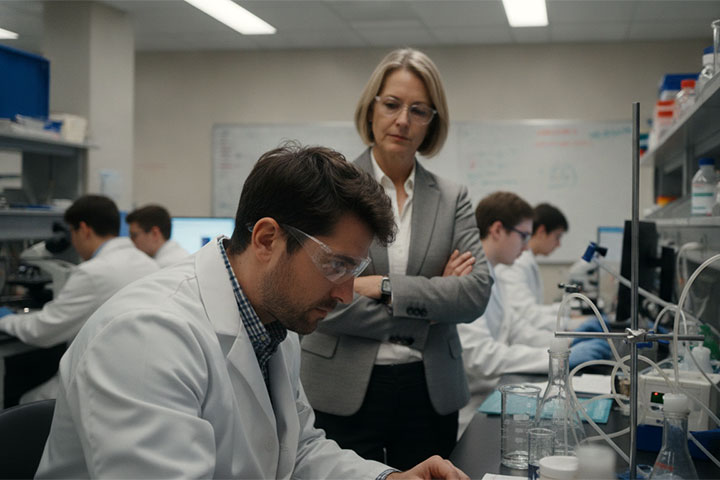
Getting a PhD is a demanding research endeavor marked by uncertainty, revision, and deep specialization. If you do not enjoy research, you may burn out halfway through.
Students also underestimate visa and job-market issues. A degree only pays off if the destination country allows reasonable post-study work options or if the qualification remains valuable when you return home.
Although every student is different, all applicants often share a few realities. Financing matters more than anything, and making a mistake in this area could ruin everything.
For most international students, scholarships and low-cost destinations can change the equation. The affordability, access, and practical migration routes often shape the decision more than status alone.
The challenge is often to justify the cost of leaving a large and growing domestic education market. The strongest approach is always the same: choose the lowest-cost degree level that still matches your career goal. So:
- A bachelor’s is logical when the long-term advantages outweigh the cost.
- A master’s is good for most applicants.
- A PhD is for research-driven candidates.
Conclusion
For most international applicants, a master’s abroad offers the best balance of cost, speed, and opportunity. A PhD makes sense for serious researchers, while a bachelor’s abroad works best only when funding and long-term plans are strong.
If you are wondering how to make the most efficient study abroad degree choice, consult the Abroadin experts.
Frequently Asked Questions
1. What are the differences between a Bachelor’s, Master’s, and PhD for studying abroad?
A Bachelor's provides an undergraduate foundation and early immersion but demands the longest commitment. Master's balances cost, speed, and career payoff in 1-2 years. PhD trains for research, academia, or R&D, lasting 3-6+ years.
2. Which study abroad degree choice is best for career goals?
A master's is best for employability, migration, and flexibility into jobs or a PhD. A bachelor's degree is a good fit for full immersion if it's affordable in the long term. A PhD is ideal for academic careers with funding and maturity.
3. What are the costs and funding options for studying abroad at each level?
A bachelor's is the riskiest and most expensive over 3-4 years; self-funding is hard for many. Master's has a manageable, shorter duration; seek scholarships. Funded PhD often cover tuition and living costs via universities or grants.
4. Do I need a Master’s before a PhD abroad?
It is not always required, but it is a smart path to take. Complete a Bachelor's at home, a Master's abroad, then a funded PhD. Direct from Bachelor's, possible with a strong record and research direction for research careers.
5. Is a PhD or a Master's worth it for non-academic careers abroad?
Master's is about industry jobs, migration, and flexibility. PhD suits specialized non-academic R&D/policy but not quick jobs. If you are not research-passionate, avoid it to prevent burnout.
Talk to an Abroadin advisor and get clarity on destinations, documents, funding possibilities, and your smartest next step.