

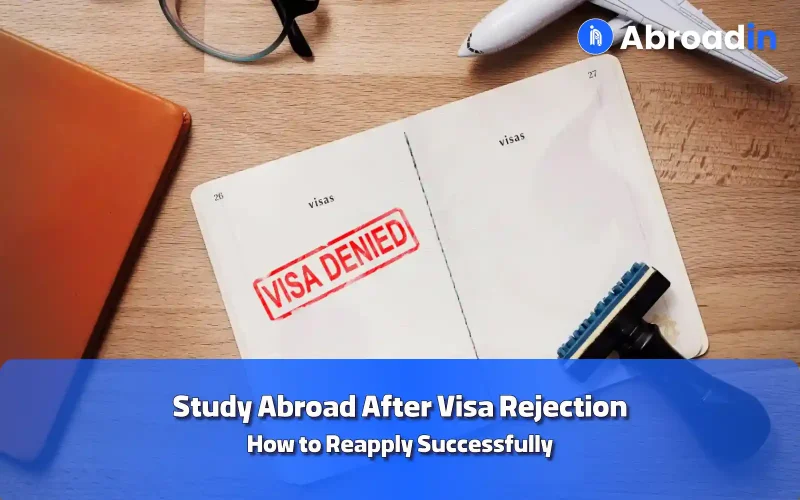

What does Student Visa Rejections Mean?
Student visa denials have become increasingly frequent worldwide. Key contributing factors include policy changes, processing backlogs, and heightened scrutiny.
Rejection rates vary significantly by destination:
- The US currently stands at approximately 41% for F-1 visas.
- Canada ranges from 50% to 80%, depending on the region.
- Australia sits at 15–18%.
- The UK is at 6–8%, with a temporary spike to 12% in early 2025.
- Germany is around 18%.
These figures highlight that high refusal rates are often systemic rather than an individual failure.
Visa officers today apply stricter interpretations of the “genuine student” and “genuine temporary entrant” criteria.
Nationality, economic conditions in the home country, and even the chosen institution can influence outcomes.
A refusal often causes intense emotional distress. Recent surveys show that 68% of refused students experience moderate to severe anxiety, while 42% consider abandoning international education entirely.
Understanding these macro trends can help applicants avoid taking refusals personally and focus on factors within their control.
Meanwhile, social media timelines filled with peers’ acceptance posts can exacerbate feelings of isolation.
Financially, the impact can be significant: non-refundable application fees, SEVIS charges, university deposits, and canceled flights commonly total $2000 to $5000.
Universities may defer admission once or twice, but repeated refusals risk permanent withdrawal of offers.
Despite these setbacks, thousands of students rebound each year. The difference lies in reframing a refusal as constructive feedback and moving forward with a structured corrective plan.
What are the Common Reasons for Student Visa Refusal?
If you want to study abroad after visa rejection, first you should know the real reason behind your refusal.
Every rejection letter contains specific clues to the main reason for the rejection. These are some instances:
- A US 214(b) refusal focuses exclusively on intent to return, not finances or academics.
- Canadian letters citing “purpose of visit” usually signal doubts about academic seriousness or post-graduation plans.
- UK and Australian letters tend to be more explicit, citing specific paragraphs of immigration rules that were breached.
Read the refusal letter as a diagnostic tool! Highlight every point mentioned; those are the only issues you must address for the next attempt.
Visa officers decide within minutes, scanning for inconsistencies that undermine credibility.
The most frequent grounds include insufficient financial proof, such as bank statements that are too recent, show sudden large deposits, or fall below the required threshold.
Weak ties to the home country represent another major trigger. Limited evidence of family obligations, property ownership, employment prospects, or clear career plans back home often leads officers to presume immigrant intent.
Incomplete or inconsistent documentation also proves fatal. Missing transcripts, untranslated certificates, mismatched names across documents, or expired English test scores instantly raise red flags.

A poorly written SOP usually seals the outcome. Generic content, unrealistic career projections, or failure to connect the chosen program to concrete future goals in the home country destroy credibility.
Inadequate English proficiency, prior immigration violations, unexplained study gaps, and excessive short-term travel to the destination country round out the typical grounds for refusal.

How to Study Abroad After Visa Rejection? Appeal, Reapply, or Pivot
After a visa refusal, students have three realistic options to move forward. The first option is an administrative review or formal appeal. It works best when the visa officer made an apparent procedural or factual mistake.
In the UK and Australia, about 35–45% of such appeals succeed. These cases often involve errors in documentation evaluation or misunderstandings of submitted evidence.
Students should gather precise records and carefully address the officer’s stated reasons to maximize their chances for study abroad after visa rejection.
The second option is a fresh reapplication with new and more substantial evidence. This method produces the highest reversal rates when students address the original weaknesses.
Success usually ranges from 55–70%. Common issues resolved in this way include insufficient financial proof, unclear study plans, or doubts about the genuineness of temporary intent.
Providing updated bank statements, more precise study objectives, and stronger ties to the home country can significantly improve approval chances.
The third option is switching to a different destination or program. This choice gives applicants a clean slate and avoids previous refusals affecting the decision.
Approval rates in lower-risk countries after repeated denials elsewhere can reach 80–95%. This approach works well for students who face systemic barriers, such as US 214(b) refusals or concerns about Canadian dual intent.
Choosing the right path depends on the refusal reason, available time, and budget. Most students succeed when they honestly assess their application, correct weaknesses, and provide clear, complete evidence.
How to Reapply After Refusal? Step-by-Step Framework
This section draws from the latest data, such as the US F-1 visa denial rate reaching 41% (a 10-year high) and Canada rejecting nearly 80% of Indian applications, to provide evidence-based, actionable steps.
Study abroad after visa rejection successfully begins with treating the refusal as a detailed roadmap rather than a dead end.
The majority of students who secure approval on their second or third attempt do so by systematically eliminating every weakness flagged in the original decision.
Start study abroad after visa rejection by waiting only as long as necessary to gather meaningful new evidence.
Immediate reapplications without change usually fail, yet waiting six to twelve months is unnecessary when the fixes are straightforward.
The most effective sequence includes six core actions, which we review below. Applicants who follow this sequence raise their approval chances by 55–70% on the next attempt.
1. Strengths Financial Proof
Financial shortcomings account for roughly one-third of all refusals worldwide. Officers are no longer satisfied with the minimum required amount; they seek stability, source legitimacy, and liquidity for at least 6 months.
Education loans from recognized financial institutions remain the gold standard because they demonstrate both capacity and commitment. The Canadian and Australian officers explicitly favor sanctioned loans over sudden parental deposits.
Provide bank statements covering 180 days instead of the minimum 28 days, maintain balances 20–30% above the threshold, and include a clear affidavit explaining the source of every large credit.
These measures alone have turned thousands of financial refusals into approvals within weeks. Please do not take them for granted!
2. Ties to Home Country for Study Abroad After Visa Rejection
Section 214(b) refusals in the US and similar “genuine temporary entrant” concerns elsewhere hinge on one question: will the applicant return after studies? Strong, layered evidence is essential.
Compile property deeds, family business documents, job offer letters for post-graduation roles, or proof of ongoing professional licenses.
Younger applicants benefit from parental affidavits detailing inheritance expectations or family enterprises they are expected to join.
Recent graduates often succeed by securing employment contracts contingent on degree completion. One documented future obligation outweighs ten vague promises.
3. Create a Compelling New Personal Statement
A recycled Statement of Purpose is the fastest route to another refusal. The new version must directly address the previous concerns while telling a coherent career story.
Begin with the current professional reality, explain how the chosen program fills a specific skill gap unavailable at home, and end with concrete post-study plans that benefit the home country.
Use facts, figures, and named organizations rather than emotional appeals. Your personal statement should be a document with substantial evidence.
Successful statements average 900 to 1200 words and include at least three measurable future milestones. Officers consistently reward specificity over passion.
Student Visa Appeal Guide
Most countries allow formal appeals, but the US does not. The success of an appeal depends on strict criteria and the nature of the original refusal.
In the UK, administrative reviews cost around £80 and take 14–28 days. They succeed mainly when the original decision shows a clear legal or factual error.
Submitting new evidence is rarely allowed, so applicants must focus on demonstrating the mistake in the initial assessment.
Australia allows appeals to the Administrative Appeals Tribunal (AAT), with a standard fee of AUD 3374, which may be reduced for financial hardship.
These appeals accept new evidence and achieve higher success rates, especially in cases involving doubts about a student’s genuine intention. However, the process can take 12–18 months, so applicants should plan carefully.
In Canada, students can request a Federal Court judicial review, but only on procedural fairness grounds. Experts usually recommend submitting a new application, unless the original refusal shows a clear procedural error.
Germany and Ireland provide internal reconsideration requests at minimal cost, typically within one month.
These reviews work best when the refusal letter shows that the policy was misapplied rather than correctly applied within the officer’s discretion.
Overall, appeals succeed most often when the refusal contains a demonstrable mistake, not just a difference of judgment. Do you want to study abroad after visa rejection?
Students should carefully review the refusal letter, understand the legal framework, and present precise arguments to increase the chance of a successful appeal.
Real Success Stories of Study Abroad After Visa Rejection
There are many success stories out there. Abroadin consultants helped many applicants reach their goals, even after their first student visa refusal. For instance:
- A Nigerian applicant received seven consecutive US F-1 refusals under 214(b). On attempt eight, he included a family manufacturing business valuation report, a signed succession plan, and a contingent employment letter—visa issued within five days.
- An Indian student, twice refused by Canada for insufficient funds, switched to a sanctioned CAD 4.2 million education loan, added parental business financials, and received approval in 9 days under the regular stream.
- An Australian Genuine Student refusal was overturned on the second application after the applicant volunteered for 6 months with an Indian NGO in the exact field of study, and provided letters from the CEO and government officials confirming future employment.
These cases of study abroad after visa rejection share one pattern: each applicant added new, layered, verifiable evidence rather than arguing against the original decision.
What are the Alternative Destinations with Higher Approval Rates?
When a country repeatedly denies a visa, it is often easier, faster, and less stressful to explore alternatives than to keep reapply after refusal.
Changing direction can improve overall chances of studying abroad and reduce emotional and financial strain.
- Germany remains a strong option for students with well-prepared applications. Approval rates reach 82–85%, especially for those who submit complete documentation.
- Ireland also offers high approval rates. Master’s applicants often see success rates of 90–93%, along with two-year stay-back periods for graduates.
- Other countries, such as New Zealand, the Netherlands, and France, report approval rates above 80% in 2025, provided applicants meet basic academic and financial requirements.
Many students who experienced repeated refusals in countries like Canada have successfully shifted to Germany.
Some obtained German national visas within eight weeks and later transferred credits or continued their education in other European programs.
Focusing on countries with higher approval rates, clear post-study opportunities, and supportive immigration policies often saves time, money, and stress.
Need Professional Guidance?
While many students succeed on their own for study abroad after visa rejection, certain situations strongly favor expert intervention.
Complex refusal histories (three or more), prior visa violations, lengthy study gaps, or applications from high-risk nationalities benefit from the services of regulated consultants or immigration lawyers.
Look for professionals registered with official bodies (MARA in Australia, OISC in the UK, ICCRC/RCIC in Canada) who publish verifiable success metrics. A single strategy session can identify blind spots that months of self-preparation miss.
Your international education journey is far from over! Book a visa strategy session with Abroadin today to receive a personalized refusal autopsy and roadmap that has helped hundreds turn rejection into approval.






No comment yet, add your voice below!