



Studying in Europe has become more accessible for Brazilian students than it was a decade ago. Affordable tuition fees and expanding scholarship opportunities have transformed Europe into a popular destination for higher education. There are some countries in Europe with quality education at low costs. This guide explores the cheap European countries for Brazilian students to study abroad.
1. Portugal, Top European Country for Brazilian Students
- The official website of the Embassy of Portugal in Brazil
- Address: SES – Setor de Embaixadas Sul, Quadra 801, Lote 02, CEP 70402-900, Brasília – DF, Brasil
Portuguese universities increasingly accept Brazilian applicants, and many institutions accept Brazil’s ENEM exam as part of the admission process.
Tuition fees in Portugal are lower than in Western Europe. Public universities often charge between €1,000 and €4,000 annually for international students.
Cities outside Lisbon and Porto tend to offer even lower living costs, making places like Coimbra, Braga, and Aveiro popular choices for budget-conscious students.
Accommodation is one of the biggest expenses, but student residences and shared apartments are more affordable than larger European capitals.
Public transportation in Portugal is efficient, and students receive discounted fares across most cities.
Healthcare access is inexpensive through Portugal’s public health system. International students have access to the facilities too.
Another advantage is the country’s immigration policies for international students. International graduates can remain in Portugal after completing their studies to seek employment.
2. Germany, One of the Cheap European Countries for Brazilian Students
- The official website of the Embassy of Germany in Brazil
- Address: SES – Avenida das Nações, Qd. 807, lote 25, Brasília – DF, CEP 70415-900
Public universities in most German states charge either no tuition fees or only small administrative fees for international students, including Brazilians. This policy reduces the financial burden of higher education.
Students pay between €150 and €350 per semester in administrative costs, which often include public transportation passes.
While living expenses in cities such as Munich and Frankfurt can be high, smaller university towns like Leipzig, Dresden, and Aachen offer much lower accommodation costs.
Germany’s academic reputation is strong in engineering, technology, business field of study, and scientific research.
Universities have close partnerships with industries, creating valuable internship and employment opportunities for international students.
Many master’s programs are fully taught in English, which has increased Germany’s popularity among non-German-speaking students.
Brazilian students benefit from Germany’s reliable transportation systems, subsidized student services, and affordable healthcare. They can work part-time during their studies to help offset expenses.
One challenge is securing accommodation in major cities, where demand can exceed supply. Applying early for student housing is essential.
Learning German improves social integration and employment prospects, even when studying in English-language programs.
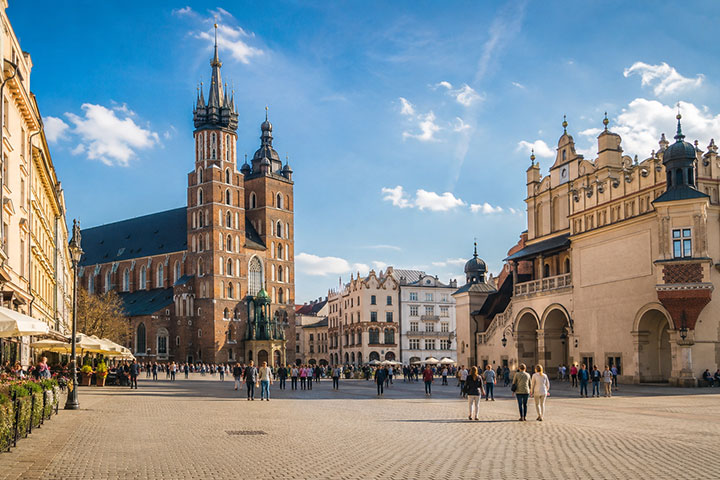
3. Poland, European Country to Study Abroad
- The official website of the Embassy of Poland in Brazil
- Address: Av. das Nações, Quadra 809, Lote 33, CEP 70423-900, Brasília – DF, Brasil
Tuition and living expenses are affordable in Poland compared to other Western European countries. So, it’s considered one of the cheap European countries for Brazilian students to study abroad.
International tuition fees range from €2,000 to €5,000 annually, depending on the institution and field of study. Living expenses are also low.

Students can manage on monthly budgets of €500-€800, particularly in cities such as Lublin, Łódź, and Kraków.
Polish universities have improved in global rankings over the past decade, especially in medicine, engineering, computer science, and economics.
Medical schools in Poland are popular among international students because they offer internationally recognized degrees at lower costs than many Western countries.
Public transportation, student discounts, and affordable dining further help reduce expenses.
Student dormitories are the cheapest housing options, though many international students also choose shared apartments.
Poland’s central European location allows students to travel easily to neighboring countries at low costs. Budget airlines and rail networks make regional travel accessible for students interested in exploring Europe.
Although the Polish language initially seem difficult, many younger residents speak English well, particularly in university cities. International student communities continue to grow, creating a more welcoming environment each year.
4. Hungary, One of the Cheap European Countries for Brazilian Students
- The official website of the Embassy of Hungary in Brazil
- Address: SES. Av. das Nações, Quadra 805, Lote 19, CEP 70413-900, Brasília – DF, Brasil
Hungary offers one of the most affordable university experiences in Central Europe, while maintaining strong academic standards across several disciplines.
The country has become popular among international students studying medicine, dentistry, pharmacy, and engineering.
Tuition fees vary by program, but many undergraduate and master’s degrees cost between €2,500 and €6,000 per year.
Medical programs are more expensive, though still cheaper than equivalent degrees in Western Europe. Living costs are moderate, especially outside Budapest.
Budapest itself combines historic architecture, efficient transportation, and a vibrant student culture. Despite being Hungary’s most expensive city, it is more affordable than many European capitals.
Hungarian universities increasingly offer programs in English to attract international applicants. Institutions such as Eötvös Loránd University and the University of Debrecen are popular among international students.
The Hungarian government also participates in international scholarship programs that may reduce tuition or living costs for eligible students. Public transportation discounts and low restaurant prices further support student affordability.
One advantage for Brazilian students is Hungary’s strategic location within Europe. Weekend travel to Austria, Slovakia, Croatia, and other nearby countries is inexpensive, enhancing the international experience.
Although learning Hungarian is not mandatory for many academic programs, basic language skills can help students navigate daily life more comfortably.
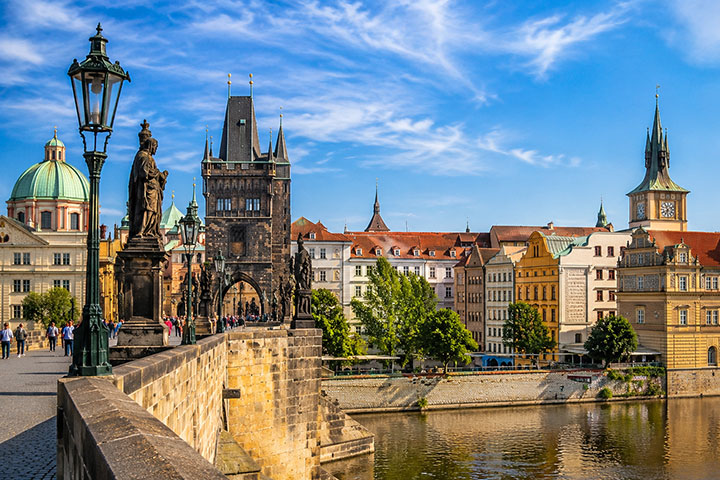
5. Czech Republic, Top European Country for Brazilian Students
- The official website of the Embassy of the Czech Republic in Brazil
- Address: SES 805, Lote 21A, Via L3 Sul, Asa Sul, CEP 70200-901, Brasília – DF, Brasil
Public universities offering programs in Czech are tuition-free, including for international students.
English-language programs usually involve tuition fees, but they are lower than those in many Western European countries.
Prague attracts the largest number of international students due to its global reputation, cultural life, and prestigious universities.
However, smaller cities such as Brno and Olomouc often provide lower living costs while maintaining excellent educational standards.
Average tuition fees for English-taught programs range from €2,000 to €6,000 annually. Living expenses are also manageable, especially when compared to neighboring Germany or Austria. Student discounts on transportation, cultural events, and public services further reduce monthly costs.
Safety is another major advantage in this European country. Czech cities rank among the safest in Europe, an important consideration for those studying abroad.
Public transportation systems are reliable, affordable, and well-connected. This helps international students manage their daily expenses.
The country’s central location also makes travel across Europe highly convenient. Students can easily visit neighboring countries by train or bus at low prices.
While the Czech language may appear challenging initially, many universities and younger residents communicate well in English.
6. Spain, One of the Cheap European Countries for Brazilian Students
- The official website of the Embassy of Spain in Brazil
- Address: SES Avenida das Nações, Quadra 811, Lote 44, CEP 70429-900, Brasília – DF, Brasil
Spain is not the cheapest country in Europe overall, but it offers excellent value considering its academic quality and lifestyle advantages.
Public university tuition fees range from €750 to €3,500 annually, depending on the autonomous region and level of study.
Living expenses vary between cities. Madrid and Barcelona are more expensive, while Valencia, Granada, Salamanca, and Seville provide more affordable alternatives for students.
The Spanish language creates a significant advantage for Brazilians. Portuguese speakers often adapt quickly to Spanish, easing daily communication and social integration. This linguistic proximity can reduce the stress of studying abroad.
Spain excels in business, tourism, architecture, arts, social sciences, and renewable energy studies. Universities maintain strong exchange partnerships across Europe through programs connected to the European Higher Education Area.
Students benefit from discounted public transportation, affordable healthcare access, and a social university environment. Shared apartments are common and often reduce accommodation costs substantially.
Part-time work opportunities exist in larger cities, especially in tourism and hospitality sectors, although Spanish labor regulations should be reviewed before arrival. Many students also supplement their income through language tutoring or remote work.
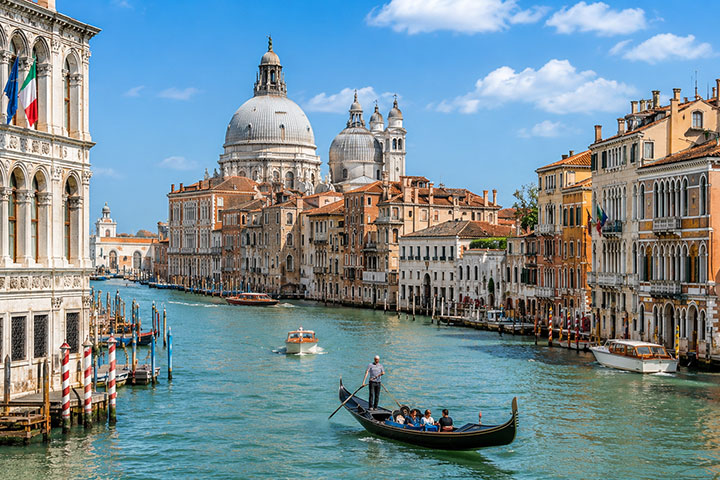
7. Italy, European Country to Study Abroad
- The official website of the Embassy of Italy in Brazil
- Address: SES. Av. das Nações, Quadra 807, Lote 30, CEP 70420-900, Brasília – DF, Brasil
For those interested in history, architecture, arts, engineering, fashion, or design, Italy is the best choice among cheap European countries for Brazilian students.
Public universities charge between €900 and €4,000 annually for international students. Tuition fees often depend on family income, meaning some students may qualify for reduced rates.
Living expenses vary between northern and southern Italy. Cities like Milan and Rome can be expensive, while Bologna, Turin, Pisa, and Naples are often more affordable.
Shared housing and university residences are more affordable for international students than private apartments.
Italy’s universities have many English-taught programs, especially at the master’s level. Institutions such as the University of Bologna and Politecnico di Milano attract large international student populations.
One of Italy’s strongest advantages is its extensive scholarship system. Regional grants may include tuition reductions, free meals, or housing assistance, lowering the total cost of study.
The country’s transportation network allows international students to travel affordably across Italy and neighboring European nations. Student discounts are available for museums, transportation, and cultural attractions.
Italian culture places strong emphasis on social interaction, food, and community life, helping many international students feel welcomed quickly.
Although knowledge of Italian improves everyday experiences and employment opportunities, many academic programs accommodate English-speaking students successfully.
8. Romania, One of the Cheap European Countries for Brazilian Students
- The official website of the Embassy of Romania in Brazil
- Address: SEN 6 – Asa Norte, Avenida das Nações, Quadra 801, Lote 06, Brasília – DF, CEP 70297-400, Brasil
Romania is one of Europe’s most overlooked affordable study destinations. Despite receiving less international attention than Western European countries, this country offers international students low tuition fees and affordable living costs.
Annual tuition fees range from €2,000 to €5,000, depending on the field of study. Medicine, engineering, and computer science programs are popular among international students.
Living expenses in Romania are among the lowest in the European Union. Students can often have comfortable lifestyles with smaller budgets than would be required in countries such as France or the Netherlands.
Cities like Cluj-Napoca, Bucharest, and Iași have developed vibrant student communities and modern infrastructure.
Public transportation is inexpensive, and many universities provide low-cost dormitory accommodation.
Romania has also become attractive for technology and IT education. The country’s growing digital sector creates internship and employment opportunities for graduates with technical skills.
Safety levels in university cities are good, and the cost of healthcare are manageable for international students. In addition, Romania’s location offers convenient travel opportunities throughout Eastern and Central Europe.
Although Romanian is the official language, many young people and university staff communicate well in English. International students often find integration easier than expected, particularly within larger academic communities.
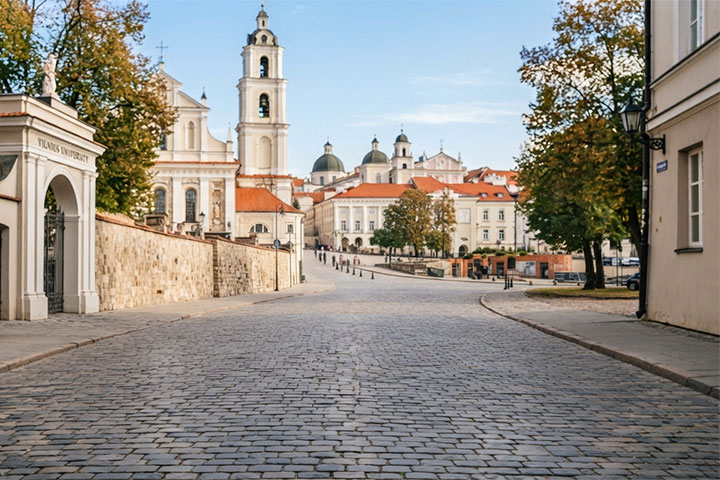
9. Lithuania, Top European Country for Brazilian Students
- The official website of the Embassy of Lithuania in Brazil
- Address: Consulate General of Lithuania, Avenida Iraí, 438, cj. 34, Indianópolis, São Paulo – SP, CEP 04082-001, Brazil
Lithuania is smaller and less internationally known than many neighboring countries, but has modern universities, low living costs, and growing international student communities.
Tuition fees for international students typically range from €2,000 to €5,000 annually. Compared with Western Europe, accommodation, transportation, and food costs are affordable.
Vilnius, the capital city, combines a modern technology sector with historic architecture and a walkable urban environment.
Kaunas, another important academic center, also attracts increasing numbers of international students because of its lower living costs and active student culture.
Lithuania performs particularly well in information technology, engineering, business, and health sciences.
Universities have expanded English-language degree offerings in recent years to attract international applicants from Latin America, Asia, and Africa.
Internet infrastructure and public services are developed, which benefits students who combine studies with freelance or remote work. Public transportation systems are efficient, affordable, and student-friendly.
The country’s relatively small size also creates a manageable environment for students adapting to life abroad for the first time. Safety standards are high, and many younger Lithuanians speak English fluently.
10. Latvia, One of the Cheap European Countries for Brazilian Students
- There is no resident embassy for Latvia in Brazil; the country has honorary consulates.
Latvia has many of the same financial advantages as neighboring Lithuania while maintaining its own distinct educational strengths.
Tuition fees are affordable by European standards, and living costs are lower than those in most Western European countries.
International students usually pay between €2,000 and €6,000 annually, depending on the university and program.
Riga, the capital city, hosts the majority of Latvia’s universities and has a lively student atmosphere and manageable living expenses.
Latvian universities are particularly recognized for business studies, logistics, information technology, and engineering.
English-language programs continue to expand, making the country increasingly accessible to international students who do not speak Latvian.
Accommodation is one of Latvia’s strongest affordability advantages. Shared apartments and university dormitories cost far less than equivalent housing in major Western European cities.
Latvia’s geographic position also allows students to travel easily throughout the Baltic region and Northern Europe. Connections to Estonia, Lithuania, Finland, and Poland are convenient and affordable.
The country has invested in digital infrastructure and education modernization, helping universities improve their competitiveness. International student support services have also improved in recent years.
Latvian society is calm and organized, which many international students appreciate during their academic transition.
While learning Latvian is beneficial for social integration, English is commonly used within universities and among younger residents.
11. Slovakia, European Country to Study Abroad
- The official website of the Embassy of Slovakia in Brazil
- Address: SES, Avenida das Nações, Quadra 805, Lote 21B, CEP 70200-902, Brasília – DF, Brasil
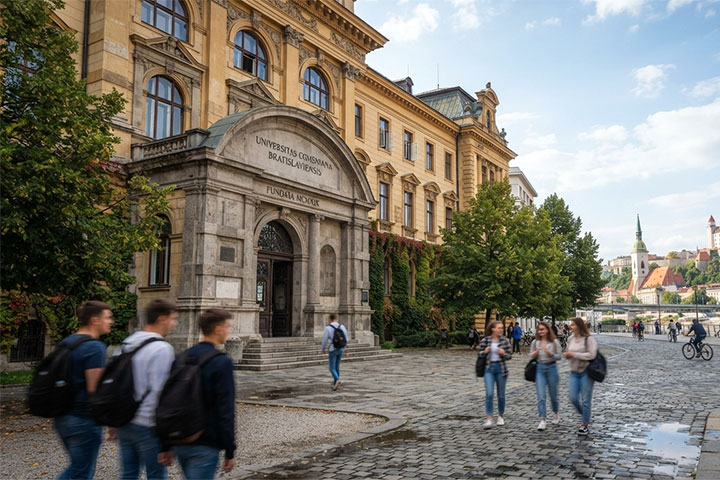
Slovakia is one of the lesser-known but highly cheap European countries for Brazilian students to study abroad.
Public universities offering programs in Slovak charge no tuition, while English-language programs are affordable compared to Western Europe.
The cost of living in Slovakia is among the lowest within the European Union. Students often spend less on rent, food, and transportation than they would in neighboring Austria or Germany.
Cities such as Bratislava, Košice, and Žilina offer affordable student lifestyles alongside modern infrastructure.
Slovakia has developed strong academic programs in engineering, technology, economics, and medicine.
Universities participate in European research partnerships, helping improve educational standards and international visibility.
Bratislava’s location near Vienna and Budapest offers additional advantages for international students interested in travel and networking. Rail and bus connections across Central Europe are inexpensive and efficient.
Student dormitories are available and cheaper than private accommodation. Public transportation systems are reliable, and students nationwide receive discounted fares.
Although Slovak is the official language, universities offering English-language programs provide sufficient support for international students. Many younger Slovaks speak English well, especially within academic environments.
12. Greece, One of the Cheap European Countries for Brazilian Students
- The official website of the Embassy of Greece in Brazil
- Address: SES, Avenida das Nações, Quadra 805, Lote 22, CEP 70480-900, Brasília – DF, Brasil
Greece has a unique combination of affordable education, historical richness, and Mediterranean lifestyle for Brazilian students.
Although often overlooked in discussions about international education, Greece has gradually expanded its English-language academic offerings and international student support systems.
Public universities charge low tuition fees for many programs, particularly at the postgraduate level. Living costs vary depending on location, but cities outside Athens and popular tourist islands are affordable.
Accommodation expenses in cities such as Thessaloniki and Patras are generally manageable, especially when students share apartments. Food and public transportation costs are also lower than in many Western European countries.
Greek universities maintain strong reputations in archaeology, history, maritime studies, engineering, tourism, and Mediterranean sciences.
The country’s strategic location between Europe, Asia, and the Middle East also creates valuable academic and professional networking opportunities.
The country’s economic recovery has also contributed to educational modernization and expanding international partnerships.
More universities now offer programs fully taught in English to attract international students.
While Greek may appear difficult initially, most universities provide administrative assistance in English, and younger residents in urban areas speak the language well.
How does Abroadin Consultation Service Help Brazilian Students?
Abroadin’s experts, who have applied to the most respected universities worldwide and have successfully migrated, are here to help you on this route. From preparing the necessary documents to getting a student visa, they help you step by step.
Just click here and make an appointment with your chosen expert to start the journey toward securing a spot in the best cheap European countries for Brazilian students!
FAQs
1. Which is the cheapest European country for Brazilian students?
Germany is often considered the cheapest option because many public universities charge little or no tuition fees. Romania, Poland, and Slovakia also offer affordable education and low living costs for Brazilian students.
2. Can Brazilian students study in Europe for free?
Brazilian students can study nearly free in countries like Germany and the Czech Republic through public universities. However, students still need to cover accommodation, transportation, food, insurance, and visa expenses.
3. What is the best cheap European countries for Brazilian students?
Portugal is often the preferred destination because of the shared language and cultural familiarity. Germany, Spain, and Italy are also highly attractive due to academic quality, affordability, and career opportunities.
4. Do Brazilian students need to speak another language in Europe?
Many European universities offer full degree programs in English, especially in Germany, Poland, Hungary, and Lithuania. However, learning the local language improves social integration and employment opportunities.
5. How much money do Brazilian students need to study in Europe?
Most Brazilian students need between €500 and €1,200 monthly depending on the country and city. Eastern European countries are generally cheaper, while Western European capitals usually require larger student budgets.







No comment yet, add your voice below!