

 Abroadin

Strong English skills help you to do a better classroom participation, reading comprehension, and clear writing. More importantly, makes it easier to connect with teachers and classmates. Many students improve faster when they practice consistently and focus on real use. English proficiency tips in this Abroadin guide help international students build confidence and improve communication. Read the following 23 practical methods for strengthening your English ability.
English Proficiency Tips for Daily Improvement
You must build practical English skills through consistent daily habits. If you are serious in this route, you should strengthen all four core abilities of language. This section consists 7 English proficiency tips for daily improvement.
1. Build Vocabulary in Context
Learn words within phrases and sentences instead of isolated lists. Study phrases rather than single words because this approach helps you remember how to use vocabulary naturally.
When you encounter a new word, write down the full sentence that contains it. This method builds understanding of collocations and word patterns.
Context teaches you when and how to use words correctly. You will recall vocabulary more easily when you connect it to real situations.
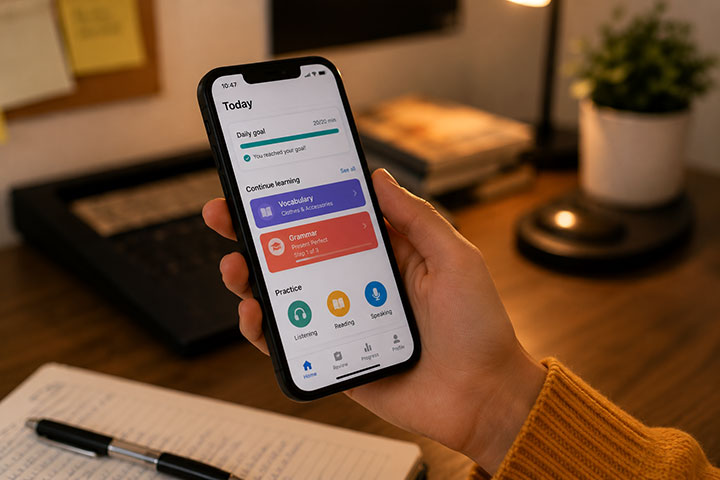
Beside building vocabulary in the context, you can use practical apps like Duolingo, which you can read about in Abroadin blog.
2. Practice Speaking Everyday
Speak English daily, even if you make mistakes. International students can improve their speaking skills through regular practice with native speakers.
Record yourself speaking and listen to identify areas for improvement. Join conversation groups or find a study partner.
Do not wait until you feel completely ready! Speaking builds confidence and fluency over time, and is one of the must-have skills for international students.
3. Listen to English Regularly, English Proficiency Tips
Listen to English podcasts, news, lectures, or conversations every day. Listening practice helps students understand different accents and speak at normal speeds.
Start with slower content and gradually increase difficulty. Active listening improves comprehension and pronunciation simultaneously.
There are many podcasts in English that you can begin with. When you get comfortable, you can go to the context to have some real space practices.
4. Read Short Texts
Articles, blogs, or textbooks are great resources to learn more and better. Read materials that challenge slightly without overwhelming you. Reading builds vocabulary, grammar awareness, and comprehension skills.
You may start with Abroadin blog which has many useful guides and also practical information. You also can leave comments for us in the comments section to discuss more.
5. Write Something Daily
Write short paragraphs, journal entries, or summaries every day. Writing reinforces vocabulary and grammar while developing your ability.
There are some penpal services online which connect you to the people around the world. You can contact real people with the same purposes through these platforms.
6. Focus on Pronunciation, English Proficiency Tips
Pronunciation is way more important than you think! Speak slowly and articulate each sound. Practice difficult sounds repeatedly until they feel natural.
If you are planning to studying in the US and other English-speaking regions, take this seriously. Prioritize clear pronunciation over perfect accent.
7. Use Grammar as a Support Tool
Study grammar to support communication, not as the primary focus. Use grammar rules to check your writing and speaking after you practice.
Grammar is important, but not in the way many people think! It helps you understand why sentences work. When you know it, you can speak more fluent.
English Study Methods that Work
Turn your daily efforts into a consistent routine by using proven study techniques that build long-term progress. This section consists 6 techniques to do so.
8. Shadowing
Shadowing means listening to native speakers and repeating what they say immediately. This technique improves pronunciation, rhythm, and fluency.
Find short audio clips or videos and practice shadowing for 10-15 minutes daily. Shadowing helps you mimic natural speech patterns and builds muscle memory for English sounds.
9. Using Flashcards, English Proficiency Tips
Use flashcards to review vocabulary systematically. Write the phrase or sentence on one side and the meaning on the other.
Include complete phrases on your flashcards. Review them regularly to strengthen memory. Digital flashcard apps also work well and let you organize words by topic.
10. Exchanging Language
Find a language partner who wants to learn your native language while teaching you English. Language exchange helps international students practice real conversation.
Meet weekly or use online platforms to connect with partners. This method builds confidence and provides authentic speaking practice.
11. Self-recording
Record yourself speaking English and listen carefully to identify mistakes. This technique improves pronunciation and fluency.
Compare your recording to native speaker audio. Self-recording builds self-awareness and helps you track progress over time.
12. Spaced Repeating, English Proficiency Tips
Review vocabulary at increasing intervals to strengthen long-term memory. Spaced repetition prevents forgetting and makes learning more efficient.
Use apps that automatically schedule reviews, or create your own system. This method aligns with how the human brain retains information.
13. Choosing Consistency Over Intensity
Study regularly for short periods instead of long, irregular sessions. The consistent daily practice yields better results than occasional, intense study.
Fifteen minutes every day works better than two hours once a week. Build a realistic routine that you can maintain long-term.

Common Mistakes to Avoid, English Proficiency Tips
There are five mistakes many learners do during their learning journey. Avoid these common mistakes to add pace to your progress and increase the effectiveness of your English study.
14. Learning too Many Words without Using Them
Many students memorize long vocabulary lists but never use the words in speaking or writing. Words stick better when you use them in sentences and real conversations.
Learn fewer words but practice them actively. Use new vocabulary in your daily writing and speaking exercises to build lasting memory.
15. Focusing Only on Grammar, English Proficiency Tips
Studying grammar alone does not build fluency. Those focus exclusively on grammar rules often struggle to communicate in real situations.
Grammar supports communication, but it should not dominate your study time. Practice speaking, listening, reading, and writing alongside grammar study.
Use grammar to check your work after you practice, not as your primary focus.
16. Waiting Until you Feel Ready to Speak
Many students delay speaking because they fear mistakes. International students improve fastest when they speak regularly, even with errors.
You will never feel completely ready! Start speaking early and accept mistakes as part of the learning process.
Confidence grows through practice, not preparation. Join conversation groups or find a language partner to practice consistently.
17. Ignoring Listening Practice
Skipping listening practice limits your ability to understand native speakers and follow lectures. Listening is a core skill for all language learners.
Listen to podcasts, news, or lectures daily. Start with simpler content and gradually increase the difficulty. Active listening improves comprehension and supports speaking development.
18. Studying Irregularly, English Proficiency Tips
Inconsistent study habits prevent real progress. Daily practice matters more than long, irregular sessions. Fifteen minutes every day works better than two hours once a week.
Build a realistic routine that you can maintain long-term. Consistency leads to steady improvement, while irregular study leads to frustration and forgetfulness.

How to Measure Progress in Learning English
After following all English proficiency tips earlier, you should track your improvement. Measure your progress with simple, observable signs that we share in the next 5 tips.
19. Understanding More in Conversation
You are improving when you understand more of what native speakers say during conversations. Notice if you catch more words without needing to ask for repetition.
You should find that following lectures and discussions requires less effort over time. Listening comprehension is a key indicator of progress. If you understand jokes, idioms, or fast speech more often, your listening skills are developing.
20. Speaking with Less Hesitation
Fluency improves when you speak with fewer pauses and less searching for words. You will form sentences more quickly and express ideas more smoothly.
Record yourself regularly to notice a reduction in hesitation. Speaking confidence grows through consistent practice. If you feel less nervous during conversations, you are making real progress.
21. Reading Faster, English Proficiency Tips
Your reading speed increases as your comprehension improves. You will need fewer breaks to understand academic texts or articles.
Vocabulary grows through context, so you recognize more words without looking them up. If you finish reading assignments faster while maintaining understanding, your reading skills are strengthening.
22. Writing more Naturally
Your writing becomes more natural when you use vocabulary and grammar correctly without excessive correction. You will express your ideas more clearly and organize your paragraphs more effectively.
Notice if you make fewer basic errors and use phrases more fluently. Having a daily writing habit helps you track this improvement.
23. Use Weekly Self-checks or Mini-goals
Set small weekly goals and review your progress every week. For example, aim to learn five new phrases, have three conversations, or read two articles.
Check your recordings, writing samples, and vocabulary usage weekly. Mini-goals keep you motivated and help you identify which areas need more attention.
Conclusion
English proficiency tips work best when you apply them consistently over time. Progress comes from daily practice across speaking, listening, reading, and writing, not from occasional intense study sessions. Focus on balanced improvement, avoid common mistakes, and track your growth with simple self-checks. If you have any experiences in learning English please share with us in the comments section below.
FAQs
1. How long does it take to improve English proficiency?
Improvement depends on consistency and practice time. Most students see noticeable progress after 3 to 6 months of constant daily practice.
2. What is the fastest way to improve English speaking skills?
Speak English daily, even if you make mistakes. Record yourself speaking and listen to identify areas for improvement. Join conversation groups and do not wait until you feel completely ready to speak.
3. How can I improve my English listening comprehension?
Listen to English podcasts, news, lectures, or conversations every day. Active listening improves comprehension and pronunciation simultaneously for international students.
4. Should I focus on grammar or vocabulary first?
Study grammar to support communication, not as the primary focus. Use grammar rules to check your writing and speaking after you practice. Learn fewer words but practice them actively in sentences and real conversations for better retention.
5. How often should I practice English to see results?
Study regularly for short periods instead of long, irregular sessions. Build a realistic routine that you can maintain long-term for steady progress. Read this Abroadin guide for 23 practical English proficiency tips.
Talk to an Abroadin advisor and get clarity on destinations, documents, funding possibilities, and your smartest next step.