



International students often work hard, earn high grades, and follow many rules. Yet, they feel invisible in the local job markets. The career fairs feel intimidating, and casual conversations with professionals feel risky to them. This Abroadin article shares some instructions of networking for international students who are planning for their career route. Let’s get to them.
Why Networking for International Students Matters
Professional networking means building two‑way relationships with people in academic, professional, and community settings.
These relationships include conversations with professors, alums, recruiters, and peers, which lead to connections over time through consistent contact.
Networking matters more for international students because many internships and graduate roles never appear on public job boards. Instead, employers often discuss opportunities first with trusted contacts or previous interns.
An international student who knows people within companies and industry associations, can gain early insight into most-valued roles and skills.
Strong networks also create mentors and references. Experienced professionals, faculty members, or advanced students can:
- Suggest courses,
- Comment on resumes, and
- Explain how hiring works in that country.
Networking for international students is a great tool for navigating unfamiliar immigration and job‑search norms.
Contacts who have already built careers abroad can share insight on work authorization, typical recruitment cycles, and cultural expectations in interviews and workplace communication.
Many success stories from study‑abroad programs initiate by a conversation with an alumnus, visiting employer, or supervisor opens a path to long‑term opportunities.
The following guides you through a step-by-step process for networking professionally as an international student. Here’s the first step:
Step 1: Build Professional Identity
The first step in networking for international students is to build a professional identity. It defines who professionally you are, and shares your must-have skills.
This focus on professional identity helps professors, career advisers, and professionals understand how they can support you. It makes it easier to choose better events, courses, and student groups in the route.
Once you know the direction, you can create a short, professional introduction which is usually called elevator pitch. You should state who you are, what you study or do, and what you aim to contribute in two or three sentences.
This introduction helps you feel more confident when meeting new people at events, in class, or online, because you already know what to say.
Other than the elevator pitch, you must work on these items for better networking:
- A well‑structured LinkedIn profile: LinkedIn profile should contain a professional photo, headline, and summary. Such profile allows contacts to see your skills and experience at a glance.
- A professional email address: The email should be simple, based on your name. Such address supports a strong impression when you contact professors or recruiters.
- A CV or portfolio: An effective CV should be in a way that you can share quickly, whether through email or a link.
The above items, if written good enough, are great tools for shaping your professional identity, and helping a more effective networking.
Step 2: Start Networking for International Students on Campus
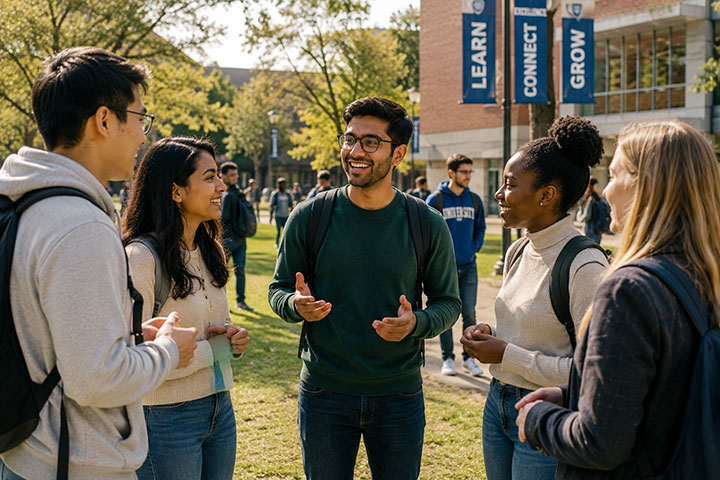
The university campus is the safest and most available place to start networking for international students.
The point of this strategy is you already have a connection with the people you meet. Many of them expect you to ask questions about courses, careers, and next steps.
International students can practice professional conversations in a low‑pressure environment before walking into larger spaces.

Professors, teaching assistants, and academic advisors are the best first contacts in the campus, because:
- They know your academic strengths,
- See how you work over time, and
- Have links with employers, research projects, or alums.
When you stay after class to ask a follow‑up question, visit office hours, or email about a topic that interests you, you show initiative and curiosity.
These interactions can lead to research opportunities, recommendation letters, or invitations to meet professionals in your field.
Workshops, employer presentations, and small networking events on campus allow you to meet recruiters and alums who already understand international student journeys.
Student clubs, societies, and professional associations add another layer of support. If you want to meet peers and senior students who can share contacts, tips, and internship experiences, join your related groups.
Step 3: Network Online
Online platforms extend networking for international students far beyond physical space. They provide direct access to alums, industry professionals, and global communities online.
When you approach digital networking in a structured way, you:
- Improve your visibility,
- Understand market expectations more quickly, and
- Create more opportunities for referrals.
LinkedIn is the main tool for this step. Start by optimizing “headline” to state your field of study, target role, and a key strength.
In the “About” section, describe your academic focus, relevant projects or experience, and your seeking opportunities.
Then use LinkedIn’s search filters to find alums from your university who work in your target industry.
Professional online behavior matters. When you send a request or message, introduce yourself, mention how you found the person, and give a reason for reaching out. Short, respectful messages show that you value their time.

Step 4: Networking for International Students in Events and Career Fairs
In‑person events give international students a direct way to practice professional communication, observe local norms, and meet many contacts in a short time. Career fairs, industry conferences, meetups, and company information sessions serve this purpose.
Each event offers access to recruiters, alums, and professionals. They intend to be available to students, so these spaces are valuable when you study in a new country.
Effective preparation shapes the experience. Before an event, you should do the following actions:
- Review the list of organizations or speakers,
- Visit their websites, and
- Note how your skills or interests connect to their work.
You can also prepare a short self‑introduction that includes your name, program, key interests, and a brief goal, such as seeking internship advice or learning about entry‑level roles.
During the event, your goal is to start concise, focused conversations. You can open with a greeting, share your introduction, and follow with one or two questions about the person’s role, the company’s expectations, or the skills they look for in new hires.
You must listen actively and keep the exchange balanced, rather than talking only about yourself. Right after the conversation, you can connect on LinkedIn or collect a business card, then add a short note about what you discussed.
Step 5: Follow Up and Maintain Relationships
Follow‑up turns brief meetings into real professional relationships. In most cases, following up within 24–48 hours works best in networking for international students.
A simple follow‑up message uses a clear structure:
- Start with a short thank‑you and a reference to where you met or what you discussed.
- Then mention one specific point that you found useful or insightful, which shows that you listened carefully.
- Add one sentence that links the conversation to your goals, such as how you plan to apply their advice or which next step you will take.
- If appropriate, close by asking a brief, reasonable question or by saying you look forward to staying in touch.
This format works for both email and LinkedIn messages and keeps your communication concise and focused.
Every few months, you can send a brief update on your studies, projects, or internships and mention how earlier guidance helped you.
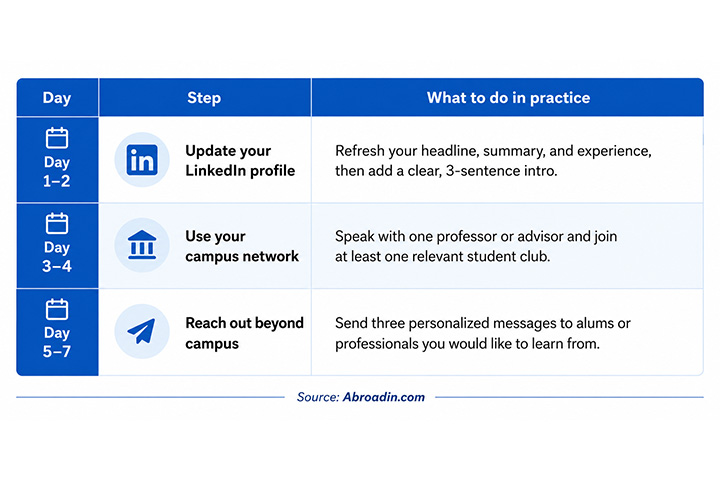
Look at the following timetable for a better grasp of networking for international students in brief:
Effects of Cultural Differences in Networking for International Students
Cultural differences shape how people build and read professional relationships. Most international students feel this strongly when they arrive in a new country.
In some cultures, asking direct questions about careers and opportunities feels normal; in others, it may seem too soon.
Expectations around small talk also vary. Some environments value brief, friendly conversation about studies, hobbies, or current events before moving to professional topics, while others move to the main point more quickly.
Attitudes toward hierarchy differ as well. In certain academic systems, students rarely approach professors or senior managers informally. However, many universities and employers in host countries expect students to speak up.
The first step is careful observation. You can watch how local students interact with faculty, staff, and recruiters, and notice the tone, body language, and topics that seem acceptable.
If a situation feels unclear, you can ask a trusted professor, advisor, or senior student for guidance on what is appropriate.
Your language abilities and global perspective can help organizations that work with international clients, diverse teams, or cross‑border projects.
When you speak with professionals, you can frame this background as your value. Instead of apologizing for your differences, explain how international experience prepares you to contribute to a global economy.
Conclusion
Building a strong career for international students is not about just good grades. It grows from clear goals, a confident professional identity, and steady relationships on campus or online. When you understand cultural differences and treat your international background as a strength, networking for international students becomes less stressful and more strategic. To take your first step, share how you plan to network in the comments section below.
FAQs
1. How networking for international students work?
International students can build a professional network by defining clear career goals, creating a strong professional identity, and connecting with people. Read this Abroadin post for a step-by-step guide.
2. Why is networking for international students important?
Many internships and jobs never appear on public job boards. Relationships with professors, alums, and professionals provide access to hidden opportunities, references, and practical guidance on local hiring, workplace culture, and immigration‑related decisions that grades alone cannot secure.
3. How should an international student network on LinkedIn?
An international student should use LinkedIn with a clear headline, a focused “About” section, and updated experience. They search for alums in target industries, send short, personalized connection requests, and follow up with thoughtful questions.
4. How can I approach professors or advisors for networking?
Stay after class, visit office hours, and send a brief email. Thank them, mention a specific topic you found helpful, state your interests, and ask a simple question or request advice about next steps or useful resources.
5. How to deal with cultural differences in networking for international students?
Observe how local students interact with faculty and professionals, and gradually adjust your style. Start on a slightly formal note, ask trusted people for feedback, and present your international background, language skills, and global perspective as strengths.







No comment yet, add your voice below!